The Importance of Posture in Daily Life
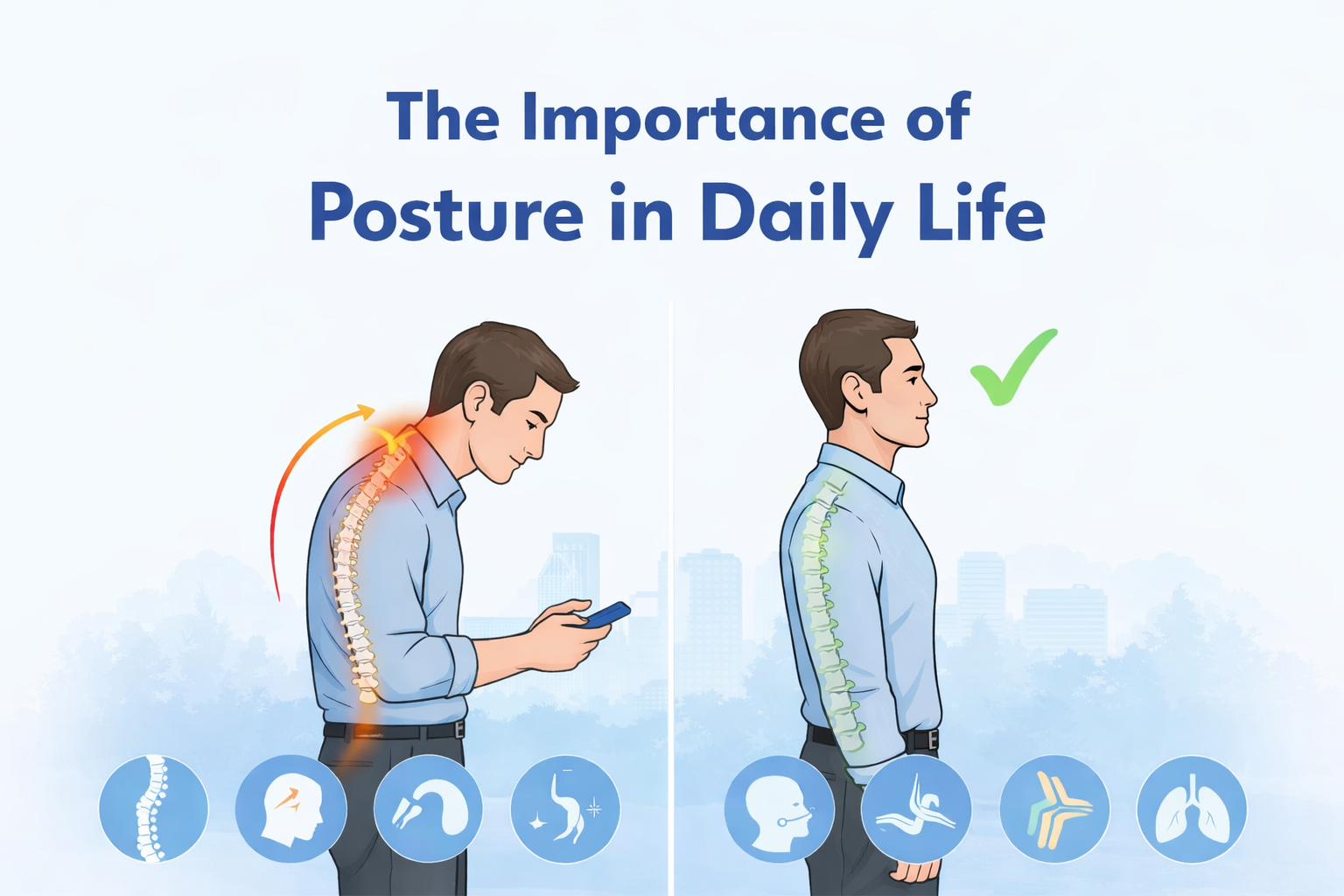
Most people don't think much about their posture until something starts to hurt. But posture isn't just about standing up straight — it affects the health of your entire spine, nervous system, energy levels, and even your mood.
In today's world, where most of us spend hours hunched over desks, phones, and steering wheels, poor posture has become an epidemic. The good news is that it's correctable — and chiropractic care is one of the most effective tools available.
What Is Posture, Really?
Posture refers to the alignment and positioning of your body relative to gravity. Good posture means your spine maintains its natural curves — a gentle inward curve at the neck (cervical lordosis), an outward curve in the mid-back (thoracic kyphosis), and an inward curve at the lower back (lumbar lordosis).
When these curves are balanced, your muscles, joints, and connective tissues work efficiently. When they're disrupted — through slouching, forward head posture, or muscle imbalances — the result is increased strain, pain, and dysfunction throughout the body.
How Poor Posture Affects Your Health
The consequences of poor posture go well beyond back pain:
1. Spinal Stress and Degeneration
Every inch your head moves forward adds roughly 10 pounds of extra load on your cervical spine. Over time, this leads to accelerated wear, disc compression, and even early degenerative changes.
2. Nerve Interference
Spinal misalignments caused by poor posture can impinge on nerves exiting the spine, leading to tingling, numbness, or weakness in the arms, hands, or legs.
3. Reduced Lung Capacity
A rounded thoracic spine limits rib cage expansion, reducing how deeply you can breathe. Studies show that slouched posture can decrease lung capacity by up to 30%.
4. Digestive Issues
Compression of the abdominal cavity from chronic slouching can impair digestion and contribute to acid reflux and sluggish gut motility.
5. Fatigue and Mood
Poor posture forces your body to work harder to maintain balance, leading to chronic muscle fatigue. Research also links upright posture to improved mood, energy, and confidence.
Common Postural Problems We See
- Forward head posture – Head positioned in front of the shoulders (common with phone and computer use)
- Rounded shoulders – Shoulders rolled forward, chest collapsed
- Anterior pelvic tilt – Lower back arched excessively, often from prolonged sitting
- Scoliosis or lateral curve – Sideways curvature of the spine
Each of these conditions has unique effects on the body and requires a targeted approach to correct.
How Chiropractic Care Improves Posture
Chiropractic care addresses posture at the structural level — not just the surface. Here's how:
Spinal Adjustments
Chiropractors restore proper alignment to misaligned vertebrae, relieving joint restrictions and reducing nerve interference. Adjustments help the spine return to its natural curve and reduce compensation patterns caused by poor posture.
Soft Tissue Therapy
Tight chest muscles, shortened hip flexors, and overworked neck muscles all contribute to poor posture. Manual therapy and myofascial release help restore balance between overactive and underactive muscle groups.
Postural Rehabilitation
A corrective exercise program is essential for lasting change. Your chiropractor will prescribe exercises targeting:
- Deep neck flexors to support cervical alignment
- Thoracic extension mobility to counteract rounding
- Glute and core activation to stabilize the pelvis and lower spine
Ergonomic and Lifestyle Coaching
Real postural change requires changing daily habits. Your chiropractor will evaluate your workstation, sleeping position, and movement patterns to identify and address the root causes of postural strain.
Simple Posture Tips You Can Start Today
You don't have to wait for an appointment to start improving your posture:
- Set up your workstation properly – Monitor at eye level, feet flat on the floor, elbows at 90°
- Use the "chin tuck" exercise – Gently retract your chin to reduce forward head posture; hold 5 seconds, repeat 10x
- Take movement breaks – Stand, stretch, or walk for 2–3 minutes every 30–45 minutes
- Strengthen your back – Rows, face pulls, and thoracic extensions counteract rounded posture
- Sleep on your back or side – Avoid sleeping on your stomach, which strains the neck and lower back
When to Seek Chiropractic Help
You should consider a chiropractic evaluation if you notice:
- Persistent neck, upper back, or lower back pain
- Headaches that worsen throughout the day
- Visible rounding of the shoulders or forward head carriage
- Fatigue, stiffness, or soreness after sitting for long periods
- Numbness or tingling in the arms or legs
The earlier postural problems are addressed, the easier they are to correct — and the less long-term damage they cause.
Final Thoughts
Good posture isn't about vanity — it's a foundation of good health. From the function of your nervous system to your energy, mood, and longevity, the way you hold your body matters more than most people realize.
Chiropractic care, combined with targeted rehabilitation and lifestyle changes, offers one of the most effective paths to lasting postural correction. If you're ready to stand taller and feel better, schedule a consultation with Dr. Avi Korman and take the first step toward better posture and better health.
Ready to Feel Better?
Schedule an appointment with Dr. Avi Korman and start your path to recovery.
Book Now